Solitaire
A single stone, prong-set to float above the band — the engagement form since Tiffany & Co. introduced the six-prong setting in 1886. It lets a ruby or sapphire of real character carry the whole ring.

Skyjems · Toronto · Since 1967
Your engagement ring, designed around a sapphire, emerald, or ruby you choose — made with you, online or in person.
Pick your colour
Blue, green, red, violet — even a stone that shifts colour in the light. Your ring starts with the one that is unmistakably yours.


The process
Every commission begins with the stone. Here is how yours comes to life.
Choose a sapphire, emerald, or ruby from the stones we already hold, each with documented provenance and its treatment disclosed. The gem leads; the design follows.
Tell us the piece you picture — a solitaire, a halo, three stones, a protective bezel. Plain language is welcome; David interprets.
David refines the design with you. Most clients work with us remotely; the Toronto showroom is open to those who prefer to meet in person.
With the design settled, a fifty-percent deposit opens the workshop. No figure is shown online — we prepare a private quote first.
Your design and your actual gems go to the CAD studio, where the stones are 3D-scanned and built into a precise model of the ring.
You see the model before anything is made. We refine it together — the setting, the proportions, the line — until it is exactly right.
Once you approve the model, the ring is cast, your gems are hand-set, and the piece is finished and inspected. Roughly three to four weeks.
The balance is settled on completion — at collection, or before your ring ships. Your finished piece is documented and delivered, insured — the stone you chose, in the setting you shaped.
Real commissions
Each of these rings began as the loose gem beside it — the gem chosen first, the design built around it.


A 4.64ct colour-change sapphire, set as a diamond scallop ring.
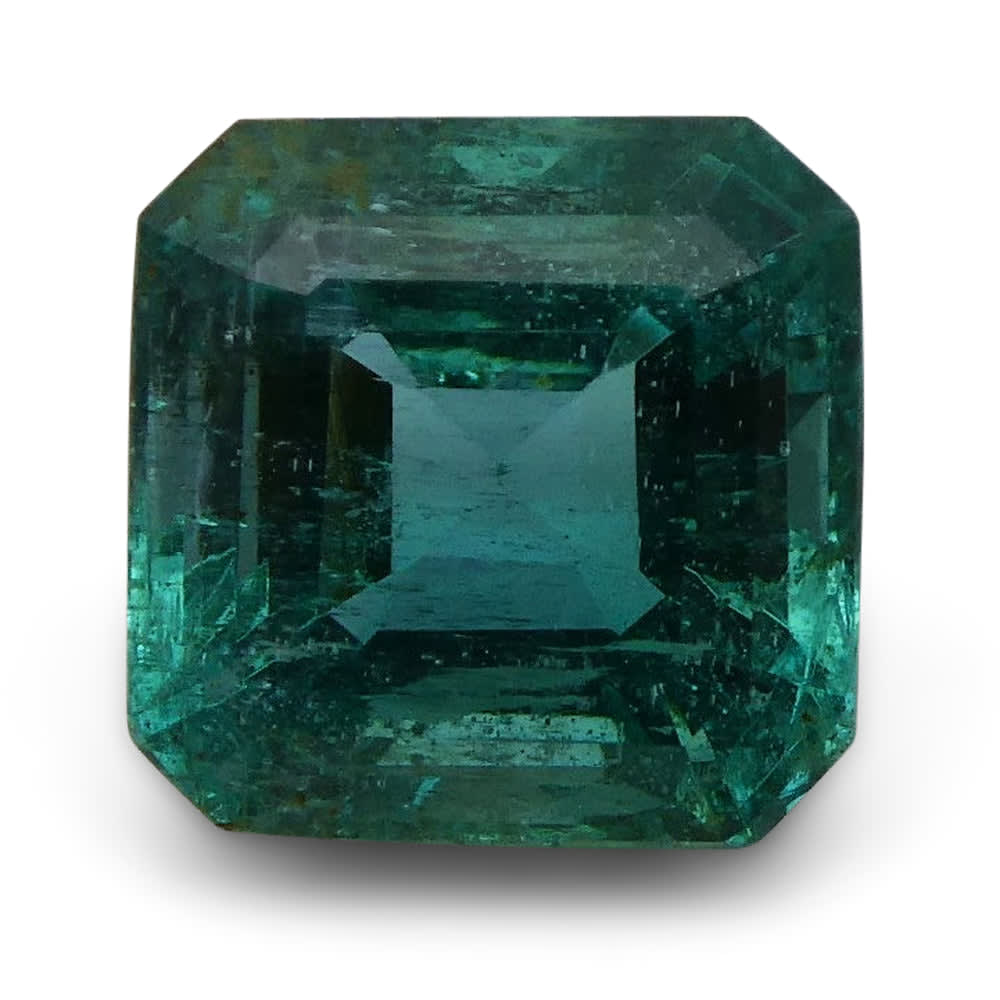

A 2.36ct Zambian emerald, set as a diamond three-stone ring.


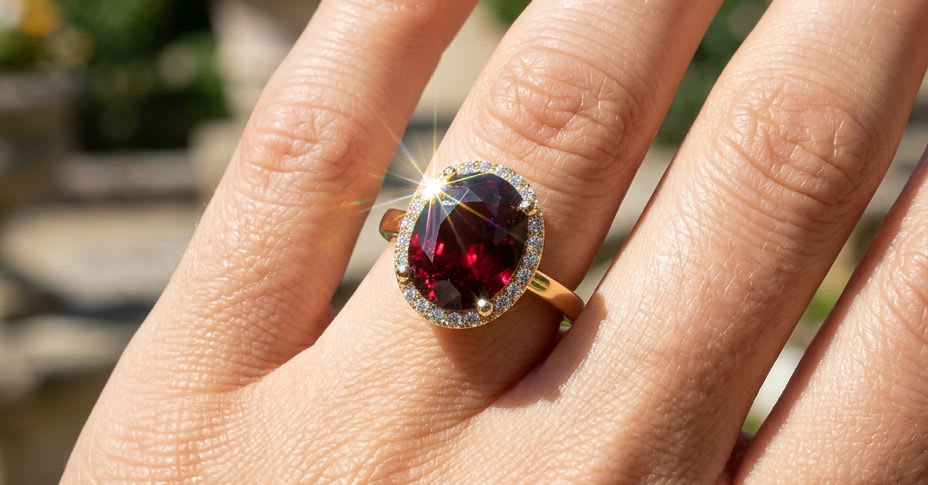
A 2.17ct Mozambique ruby, set as a diamond halo ring.


A 1.32ct colour-change alexandrite, set as a diamond cocktail ring.


A 15.46ct cushion aquamarine, set as a diamond cocktail ring.
Why a coloured stone
At this budget, most engagement rings resemble one another. Yours will not. A fine sapphire, emerald, or ruby carries a colour, an origin and a character that belong to a single ring — and we carry every major source: Ceylon and Madagascar sapphire, Mozambique and Burmese ruby, Zambian and Colombian emerald, heated and unheated, each documented. What the collection holds shifts with each acquisition; David will show you what is available.

A single stone, prong-set to float above the band — the engagement form since Tiffany & Co. introduced the six-prong setting in 1886. It lets a ruby or sapphire of real character carry the whole ring.
A centre encircled by smaller accent diamonds, so a more modest stone reads larger on the hand. Georgian in origin, revived for the modern era.
Past, present, and future — a coloured centre flanked by two diamonds, or three matched stones graduating in size. Quietly the most meaningful form.
The centre held in a smooth metal collar — the oldest and most protective setting, and the kindest to an emerald's corners. Made for everyday wear.
Begin the conversation
Tell David what you picture — the stone, the setting, the occasion. No obligation, and no figure is quoted until we understand what you are looking for. You will have a reply within one business day.